Riprap is a sloped layer of large rock placed at the base of a bulkhead or an eroding bank to absorb waves and current. In South Carolina, riprap on tidal water is a regulated "revetment" under SCDES critical area rules, so it has to be sited and approved correctly.
✓ Charleston Experts✓ Licensed in GA & SC✓ Free Inspections✓ 30 Years Experience
Quick Answer
Seawall Repairs by Solid Foundations provides riprap installation in Charleston, SC for homeowners, HOAs, and commercial waterfronts. Typical projects include toe protection for bulkheads facing boat wake in Charleston Harbor, rock for eroding banks on the Ashley and Wando rivers, and riprap installed with a new wall so it's permitted once. Call 866-398-9323 or use the quote form to book a free on-site inspection.
Can I Add Riprap to My Charleston Shoreline?
Often, but not everywhere. SC Regulation 30-12 treats revetments (riprap) together with bulkheads (SC Reg. 30-12). The key rules:
Rock must follow the critical area line as closely as feasible.
It can generally be placed up to 18 inches from the existing escarpment.
It's not allowed where healthy marsh is already buffering erosion, or where it would harm neighbors through erosion or sedimentation, unless upland is being lost to tidal erosion.
On oceanfront beaches, new erosion control structures are banned outright.
We check which of these applies to your lot before we price anything. If your bulkhead is being replaced, bundling the rock into the same application is usually easier. See bulkhead replacement in Charleston.
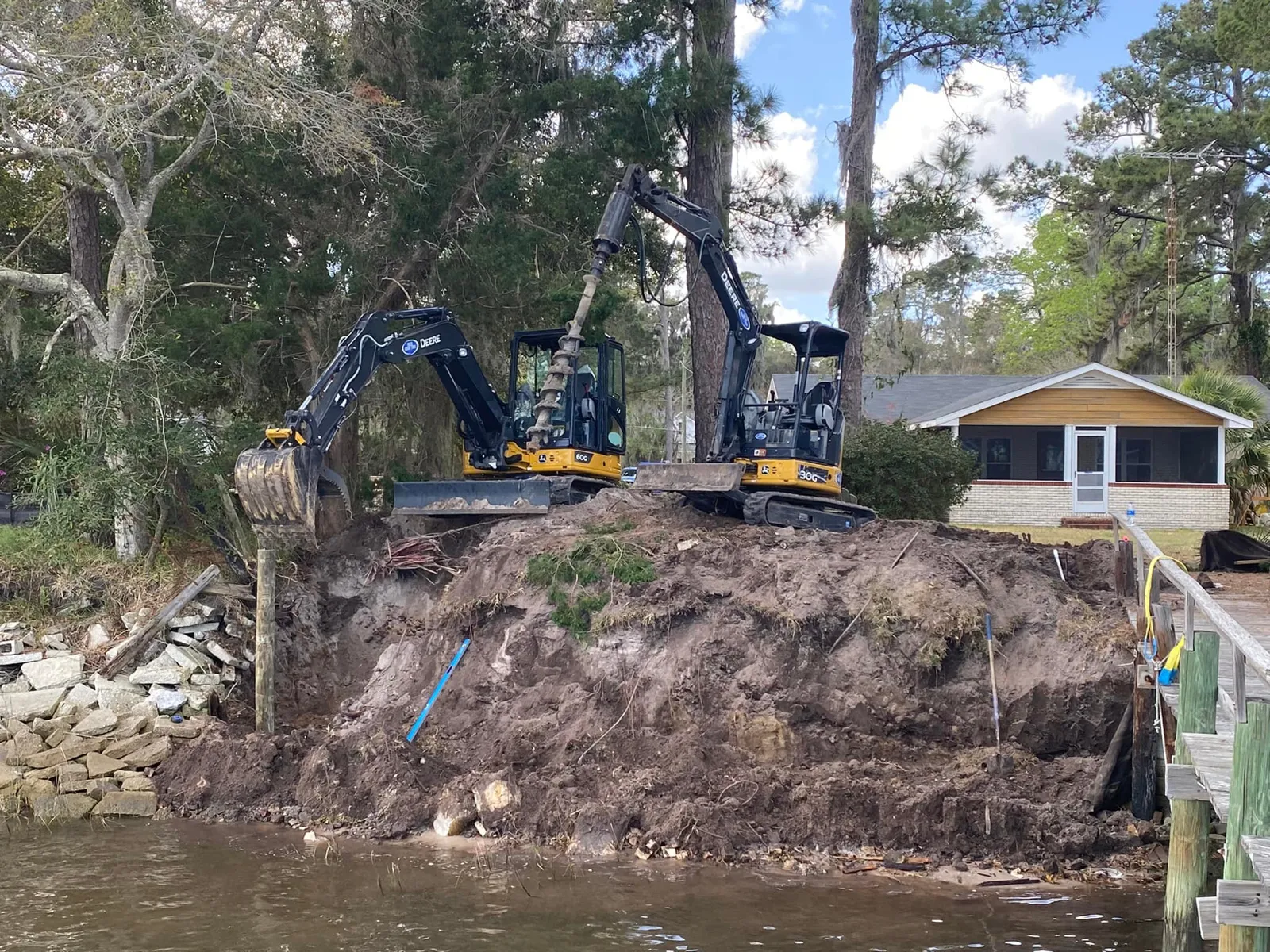
Our crew restoring an eroded bank along the water.
How Does Rock Protect a Bulkhead?
When a wave or wake hits a vertical wall, the energy bounces downward and digs at the base, a process called scour. Undercut the toe and the wall eventually leans. A riprap apron:
Breaks up energy before it reaches the wall
Covers the toe so the mud can't be dug out
Slows current sliding along the face
Creates hard surface where oysters and other marsh life can settle
South Carolina has about 344,500 acres of salt marsh, and oysters thrive in it (SCDNR). A rock toe often becomes part of that habitat within a few seasons.
How Is Riprap Built on a Charleston Creek?
Survey the bank at low tide: depth, scour, escarpment, and the critical line.
Prepare the base. Soft pluff mud at the toe may need extra preparation so the rock doesn't sink into it.
Lay filter fabric so soil can't wash out through the stone.
Place the stone to the approved slope and footprint.
Inspect the finish against the permit conditions.
Access matters on creek lots. Some jobs are best done from the water to keep heavy equipment off lawns and live oak roots.
Would a Living Shoreline Work Better?
On some creeks, yes. South Carolina's rules actively encourage living shorelines as an alternative to hardened structures in estuaries, because they offer environmental benefits and fewer impacts. They aren't allowed in creeks narrower than 20 feet unless special circumstances exist, and they must stay within your extended property lines. On a quiet creek with gentle wave energy, a living edge may be the better fit. On a wake-heavy channel, rock usually wins.
How Much Does Riprap Cost in Charleston?
Riprap installation in Charleston typically costs $125–$350 per linear foot. A standard 75-foot residential installation runs $10,000–$25,000, fully installed and permitted. Stone volume, base preparation in soft mud, and access affect the price.
Is riprap allowed in front of my marsh in Charleston?
Not if the marsh is already doing its job as an erosion buffer. SC rules reserve rock for banks where upland is actually being lost. We'll look at your shoreline and give you a straight answer.
Why does rock sink on some Charleston creeks?
Pluff mud is soft, so heavy stone set straight on it can settle. Proper base preparation and filter fabric help the rock stay put.
Can I use riprap to protect my house on the beach?
No. South Carolina doesn't allow new erosion control structures on the beach or in the beach/dune system.
Will riprap interfere with my dock in Charleston?
It extends a few feet from the base of the wall. We shape it around pilings and the float so boat access isn't blocked.