A Key West rock revetment should be walked once a year and checked after every tropical storm, so loose stones and washouts get fixed before the bank behind them is exposed.
✓ Key West Experts✓ Licensed CBC1267322✓ Free Inspections✓ 30 Years Experience
Quick Answer
Seawall Repairs by Solid Foundations provides revetment maintenance in Key West, FL for waterfront homeowners, condo associations, and commercial properties. Typical projects include resetting armor stone moved by storm waves, rebuilding scoured toes, patching torn filter fabric, and fixing washouts where rock meets a vertical wall. Call 866-398-9323 or use the quote form to book a free on-site inspection.
What Is a Revetment, and Why Does It Need Upkeep?
A revetment is a sloped bank of rock built to take waves on the slope instead of against a vertical face. Big armor stone sits on smaller rock, which sits on filter fabric over the soil. It's durable, but every storm and every season of wave action shifts a few stones. Left alone, small gaps turn into slumped sections.
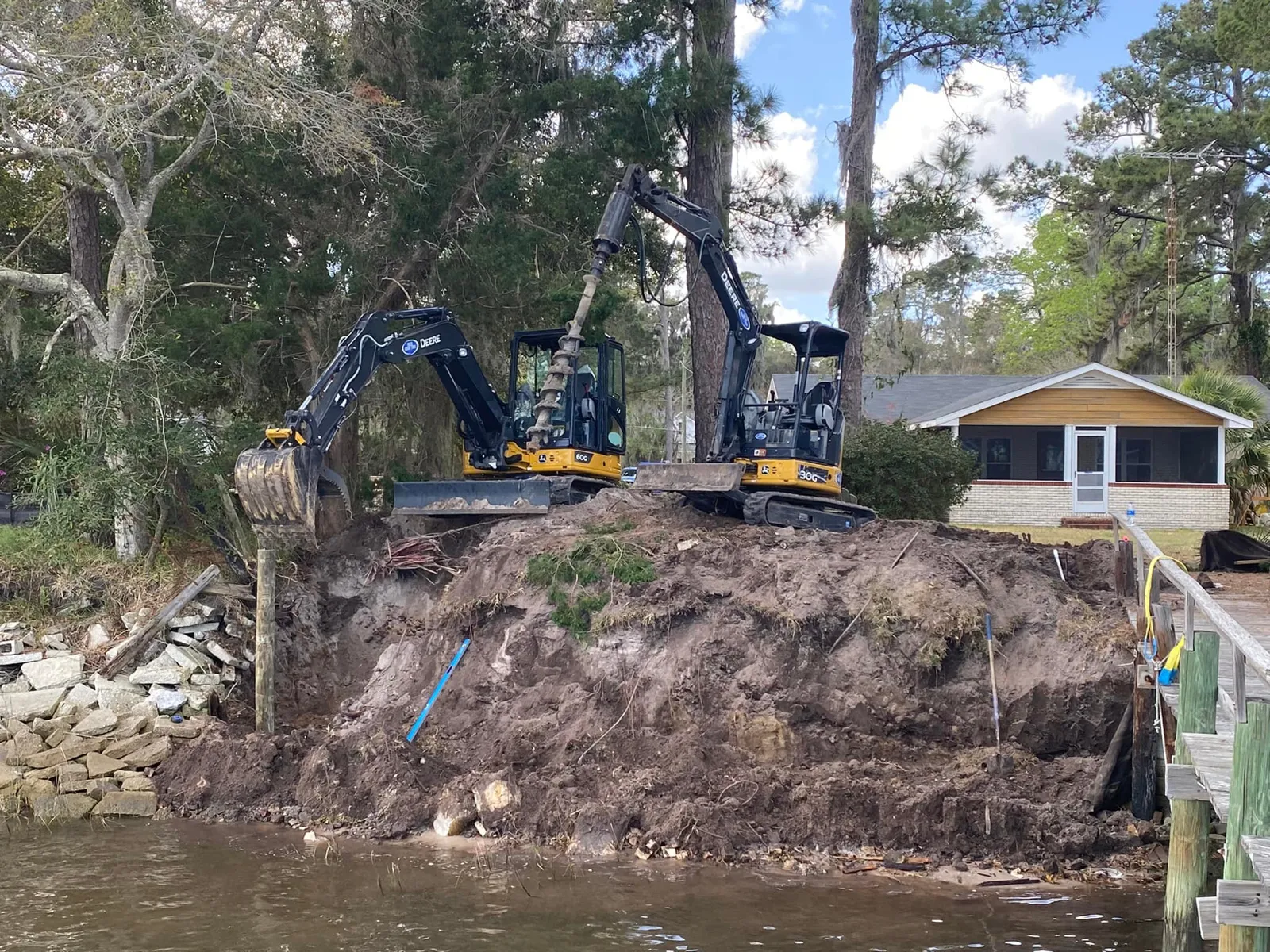
Our crew restoring an eroded bank along the water.
What Signs Say My Revetment Needs Work?
Stones missing from the top layer or rolled to the bottom
Sagging or flattened stretches in the slope
Filter fabric showing through the rock
Sand or soil washing out between stones
Scour at the toe leaving the bottom row hanging
Erosion at the ends, where the rock meets a seawall or natural shore
Ends and corners go first. Water curls around them and digs in behind.
When Should I Check My Key West Revetment?
Timing
What to look at
Late spring, before June 1
Full walk; reset loose stone; patch fabric
After any tropical storm or hurricane
Moved armor stone, toe scour, end washouts
During fall King Tides
Washout along the high-water line
Once a year, any season
Slope shape, transitions, growth among the rocks
Why the King Tide check? The city's 2024 Stormwater Master Plan documents sunny-day flooding from King Tides in low parts of the island (City of Key West). When water rides higher than usual, it works on parts of the slope that normally stay dry.
Why Do Key West Revetments Need More Attention Over Time?
The daily tide in Key West is small. NOAA's datums put the gap between mean higher high water and mean lower low water at roughly 1.8 feet (NOAA). That sounds gentle. But the average water level keeps inching up, about 1.04 inches per decade on the Key West gauge since 1913. Each bit of rise moves normal wave action a little higher up the slope, onto rock and fabric that were placed above the old waterline. Revetments built decades ago may now be taking waves where their designers never expected. Irma's surge made the point: 5 to 8 feet of water in parts of the lower Keys can pick up and move stones that sat still for years.
What Does Revetment Maintenance Include?
Routine care
Resetting displaced armor stone into the interlock
Adding stone where the slope has thinned
Clearing storm debris and checking for voids
Bigger repairs
Toe rebuilds: replacing undermined bottom rock
Fabric repair: lifting stone, replacing torn geotextile, relaying rock
Re-sloping: rebuilding flattened sections to a stable angle
End tie-ins: sealing the joint with a neighboring wall so water can't wrap around
Any work that goes beyond the existing footprint may need state, federal, or sanctuary review. We keep maintenance inside the footprint where we can.
How Much Does Revetment Maintenance Cost in Key West?
Routine revetment maintenance in Key West typically runs $1,500–$5,000 per year for a standard 100-foot residential revetment. Major rehabilitation runs $150–$400 per linear foot. Steady upkeep costs far less than a rebuild.