A rock revetment on Marco Island should be inspected yearly and after every hurricane, so stones moved by surge are reset and exposed fabric is covered before the bank behind it washes out.
✓ Marco Island Experts✓ Licensed CBC1267322✓ Free Inspections✓ 30 Years Experience
Quick Answer
Seawall Repairs by Solid Foundations provides revetment maintenance in Marco Island, FL for waterfront homeowners, condo associations, and commercial properties. Typical projects include resetting armor stone displaced by Irma and Ian on the island's south and east shores, rebuilding scoured toes, and repairing torn fabric where rock meets a neighboring Marco Island seawall. Call 866-398-9323 or use the quote form to book a free on-site inspection.
What Is a Revetment, and Why Maintain It?
A revetment is a sloped bank armored with rock: large stones over smaller rock and filter fabric. It absorbs waves rather than reflecting them. It's durable, but each storm and season of wake shifts stones slightly, and gaps eventually let soil beneath escape.
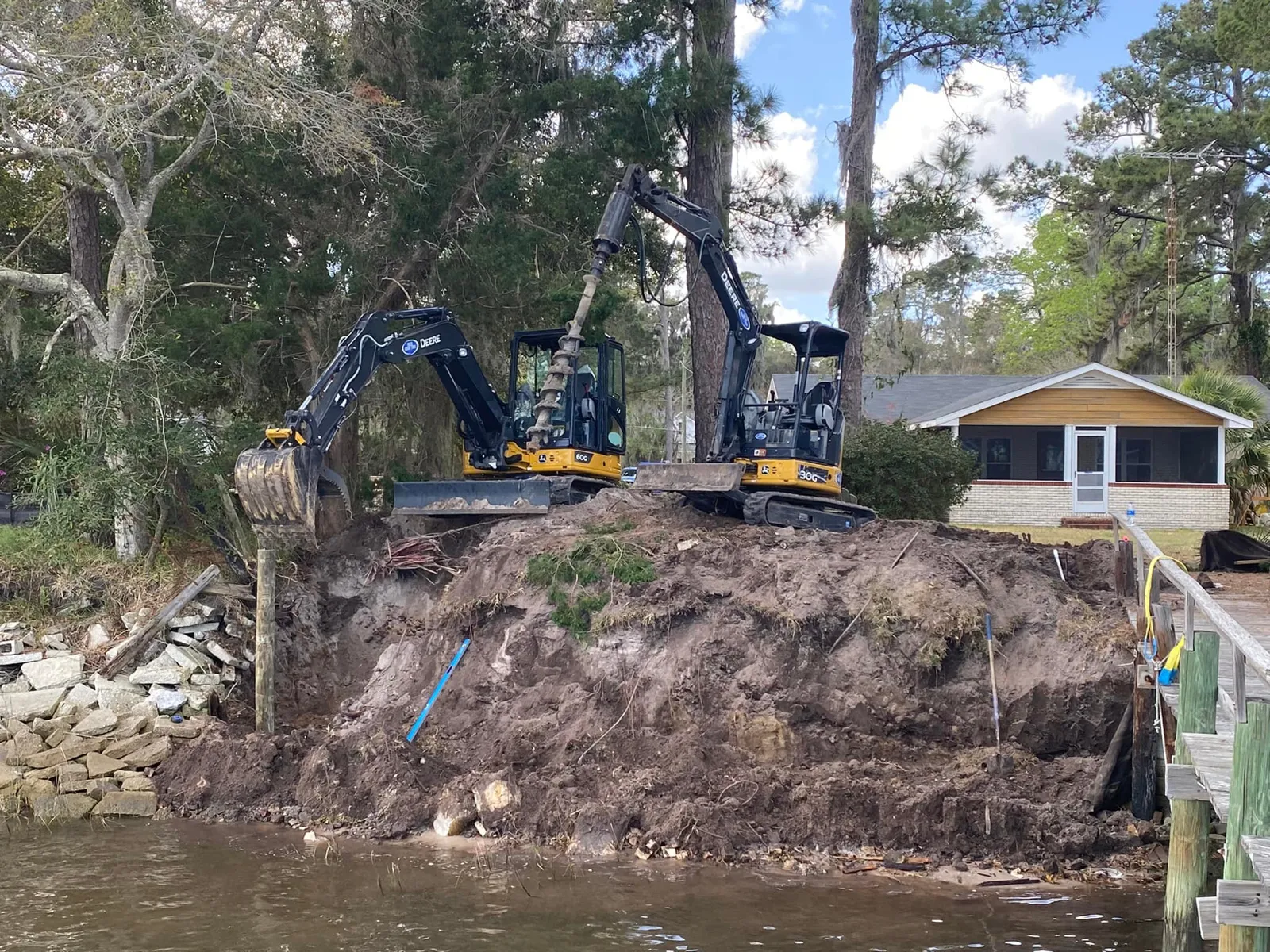
Our crew restoring an eroded bank along the water.
What Signs Point to Trouble?
Stones displaced or collected at the bottom
Flattened or slumped sections of slope
Filter fabric showing or torn
Sand washing out between stones
Toe undermined by scour
Erosion at the ends where rock meets a wall
Ends and transitions fail first because water wraps around them. A single displaced armor stone might not look like much, but it leaves the smaller rock beneath open to every wave. Once that layer shifts, the fabric and then the bank follow.
How Hard Did Recent Hurricanes Hit Marco's Shorelines?
Marco Island has taken two direct lessons in a few years. Hurricane Irma made landfall on the island on September 10, 2017, as a Category 3 with 115 mph winds, and pushed 2 to 4 feet of water mainly onto the south and east portions of the island (NWS Miami). Five years later, Ian brought deeper surge. Revetments on those exposed shores were hit by both wind-driven waves and fast-moving water, and some stones that sat untouched for years were rolled or lifted. A slope that looks fine from the lanai can have a hollow toe or torn fabric underneath. That's why a post-storm check means walking the slope at low tide, lifting a few stones where things look off, and probing the toe, not just looking from the yard. The earlier a gap is found, the less rock and labor it takes to close.
When Should a Marco Island Revetment Be Inspected?
When
What to check
Spring, before hurricane season
Full walk-through; reset loose stones; fabric
After any named storm
Displaced armor, scour, end washouts
After seasonal high tides
Washouts at the high-water line
Once a year
Slope profile, vegetation, transitions
What Does Maintenance Involve?
Routine maintenance
Resetting displaced armor stone
Adding rock where the slope has thinned
Clearing debris and checking for voids
Rehabilitation
Toe rebuilds after scour
Fabric replacement under lifted stone
Slope re-grading where sections have slumped
Transition repairs tying rock into neighboring walls
Rock work on Marco is usually done from a barge, and city rules limit idle barge time, so we plan each visit to be efficient.
How Much Does Revetment Maintenance Cost in Marco Island?
Routine revetment maintenance in Marco Island typically runs $1,500–$5,000 per year for a standard 100-foot residential revetment. Major rehabilitation runs $150–$400 per linear foot. Regular upkeep costs much less than a rebuild after years of neglect.
My revetment looks fine after Ian. Should I still have it checked?
Yes. Surge can undermine the toe or tear fabric without obvious changes on top.
How often should I inspect it?
Once a year before hurricane season, and after every named storm.
Do I need a permit to reset stones in Marco Island?
Routine work within the existing footprint is typically simpler. Changes to the slope or footprint usually need permits. We confirm with the city first.
Why does the end next to my neighbor's wall keep eroding?
Water wraps around the last stones. A proper tie-in fixes it better than extra rock.