Cape Coral rock revetments and seawall alternatives need a yearly inspection and a check after every named storm, so displaced stone, torn fabric, and scour get fixed before the bank behind them erodes.
Seawall Repairs by Solid Foundations provides revetment maintenance in Cape Coral, FL for homeowners, HOAs, and commercial property managers. Typical projects include resetting stone moved by Ian on Caloosahatchee frontage, rebuilding scoured toes on rock shorelines facing Matlacha Pass, and maintaining permitted seawall alternatives on freshwater canal lots. Call 866-398-9323 or use the quote form to book a free on-site inspection.
What Is a Revetment?
A revetment is a sloped rock shoreline: armor stone over bedding rock and filter fabric. It absorbs waves instead of reflecting them. In Cape Coral you'll find them on some open-water frontage, and the City's code allows alternatives to vertical seawalls on freshwater canals under its Engineering Design Standards (Cape Coral LDC 5.4.8.B). Either way, the code says the owner must keep the structure maintained so it doesn't become a nuisance or hazard. The City's permit center even keeps a separate residential guideline for seawall alternatives, so these shorelines are a recognized, permitted option here rather than an exception.
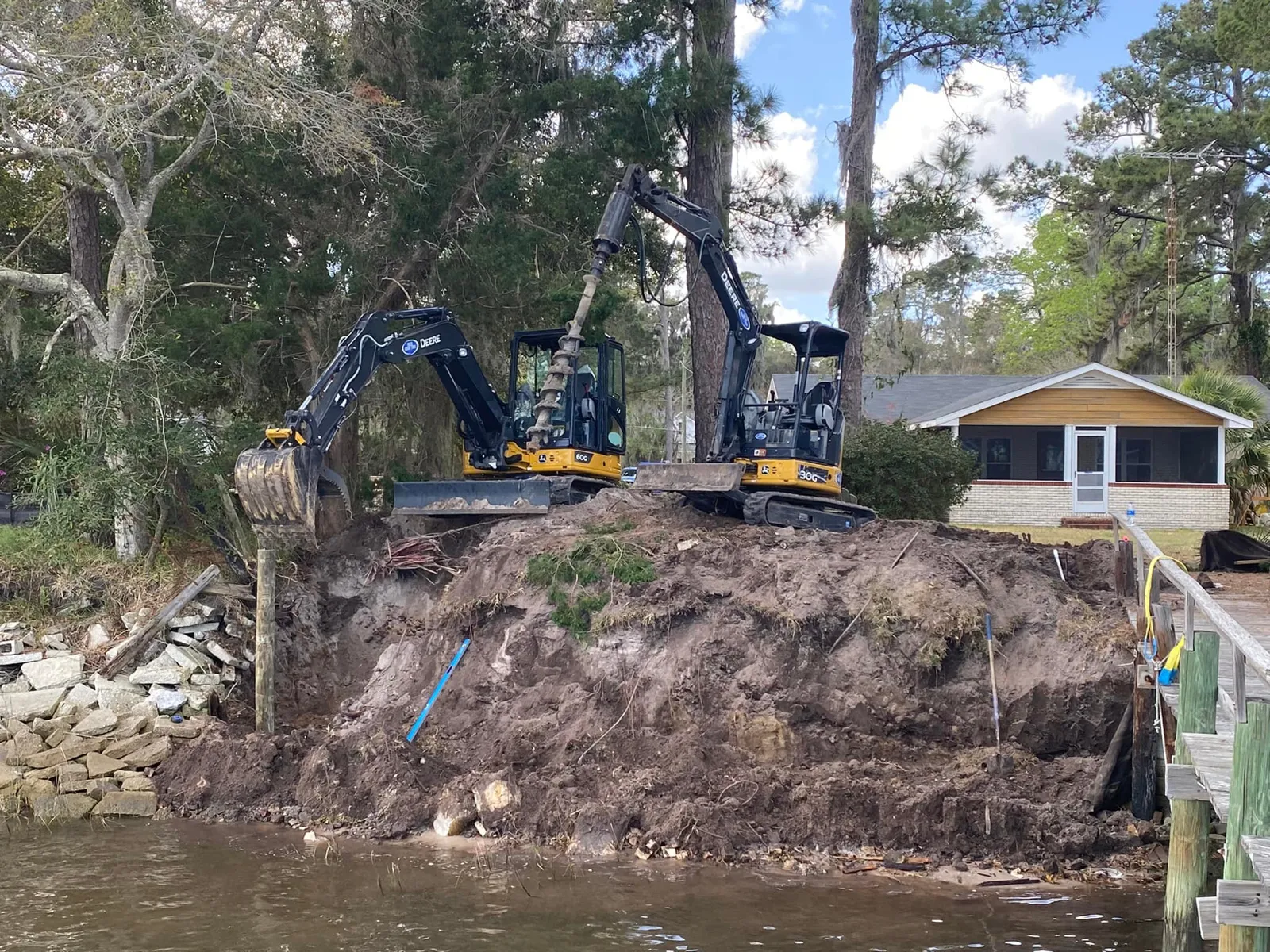
Our crew restoring an eroded bank along the water.
Which Signs Mean Maintenance Is Due?
Stones missing or rolled to the bottom
Slumped or flattened sections
Fabric showing or torn
Soil escaping between rocks
Scour undercutting the toe
Washouts where the rock meets a neighbor's wall
When Should Cape Coral Revetments Be Inspected?
When
What to check
Before June 1
Full walk; reset loose stone; fabric repairs
After any named storm
Displaced armor, toe scour, end washouts
During the summer rainy season
Soil loss between stones after heavy rain
Every year
Slope, vegetation, transitions
The storm row matters here. Ian brought 6 to 9 feet of surge inundation to Cape Coral in 2022, and Milton added 4 to 6 feet along the coast including the Caloosahatchee in 2024 (NHC Milton report).
What Does the Work Involve?
Routine
Resetting displaced armor stone
Adding stone where the slope thinned
Clearing debris and checking for voids
Rehabilitation
Toe rebuilds where scour has undercut the base
Fabric replacement under lifted stone
Re-grading flattened sections
Tie-ins at neighboring seawalls
Every visit ends with a short written report: photos of each problem area, what we recommend fixing now, what can wait, and a price for each item. That record also helps you show the City, a buyer, or an insurer that the shoreline has been kept up.
Why Do Freshwater and Saltwater Revetments Wear Differently?
The two canal systems load rock in different ways. The City's Waterfront Living Guide explains that the 300 linear miles of freshwater canals collect stormwater and pass it gradually to the tidal canals, while in saltwater areas runoff goes straight to the tide. So a freshwater-lot revetment mostly takes runoff and rain erosion from above, and the upper slope and fabric edge deserve close attention. A saltwater revetment takes tides, wakes, and surge from below, so the toe and armor layer are where trouble starts. We inspect each accordingly.
How Much Does Revetment Maintenance Cost in Cape Coral?
Routine care in Cape Coral usually runs $1,500–$5,000 per year for a standard 100-foot residential revetment. Major rehabilitation runs $150–$400 per linear foot. Regular upkeep is far cheaper than rebuilding a failed slope.