Riprap is a sloped apron of large rock set at the foot of a seawall to soak up wave energy. In Miami-Dade, how far that rock reaches into the water decides which county permit path your project takes.
✓ Miami Experts✓ Licensed CBC1267322✓ Free Inspections✓ 30 Years Experience
Quick Answer
Seawall Repairs by Solid Foundations provides riprap installation in Miami, FL for bayfront homeowners, HOAs, and commercial properties. Typical projects include limerock boulder aprons in front of Biscayne Bay seawalls in Morningside and Coconut Grove, toe protection for scoured Miami River walls, and riprap placed as habitat alongside new seawalls. Call 866-398-9323 or use the quote form to book a free on-site inspection.
Natural limerock boulders on a 2:1 slope, no more than 10 feet past mean high water
Expedited administrative authorization
Anything larger or different
Standard Class I review
State submerged-lands approval can still apply, and we confirm every piece before we quote. A county file from 2024 also shows riprap placed along a new seawall as on-site mitigation, because it extends the wall's life and creates habitat (Miami-Dade 2024 item).
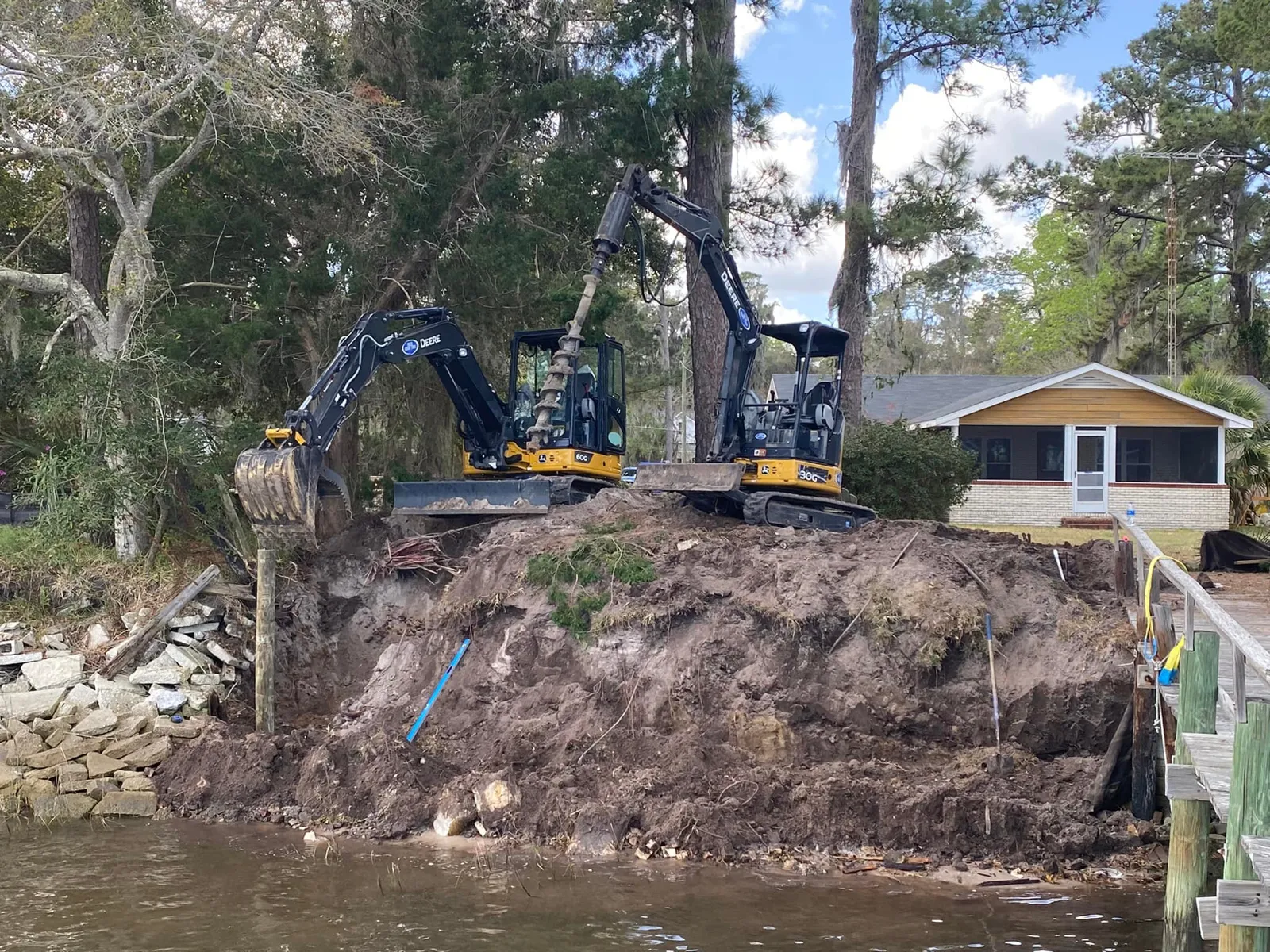
Our crew restoring an eroded bank along the water.
What Does Riprap Do for My Seawall?
A flat concrete face bounces waves straight down. That reflected energy digs a trench at the base, and once the toe is undermined the wall starts to tip. A rock apron:
Breaks up waves before they hit concrete
Guards the toe against scour
Softens storm and wake loading
Gives crabs, fish, and oysters crevices to live in
On open Biscayne Bay frontage, where wind has room to build chop, that toe protection matters more than on a sheltered canal. During Hurricane Irma in 2017, Biscayne Bay shorelines saw several feet of inundation, and fast-moving water at the base of a wall is exactly what strips out an unprotected toe. Rock won't stop a surge, but it keeps the foot of your wall from being dug out while the water rises and falls. You can read more about how riprap works on our main riprap installation page.
How Is Riprap Installed in Miami?
Measure the toe. We check water depth, existing scour, and wall condition.
Pick the path. We size the apron to fit the county category that suits your lot.
Lay filter fabric so the soil underneath doesn't wash out between the stones.
Place the boulders to the planned slope, largest stones on the outside.
Follow in-water conditions, including standard manatee protections the county applies.
Final check against the permit drawings.
Once approvals are in hand, most home installs take a few days. Bayfront jobs are often done from the water so equipment stays off your lawn.
How Much Does Riprap Cost in Miami?
Riprap installation in Miami typically costs $125–$350 per linear foot. A standard 75-foot residential installation runs $10,000–$25,000, fully installed and permitted. Depth, barge access, and the amount of stone drive the price.
Is Riprap the Same as a Revetment?
Not quite. Riprap sits in front of a wall and protects it. A revetment is a sloped rock bank that takes the place of a wall. Both need checking over time. If your property already has a rock shoreline, see revetment maintenance in Miami. Adding rock as part of a new wall? See bulkhead replacement in Miami.
Do I need a permit to put rock in front of my Miami seawall?
It depends on the size. The county lists riprap within 2 feet of the wall as exempt, and larger boulder aprons as expedited or standard Class I work. State approval may still apply.
What kind of stone is used?
The county's expedited category names natural limerock boulders. We size stone to your exposure so it stays put in storms.
Will riprap get in the way of my boat in Miami?
It extends out at the base. We lay it out around your dock and lift so access isn't affected.
Can riprap count toward mitigation on a new seawall?
In some Miami-Dade permits, yes. The county has accepted riprap along a new seawall as on-site mitigation. Each permit is decided case by case.