What does erosion behind a seawall look like?
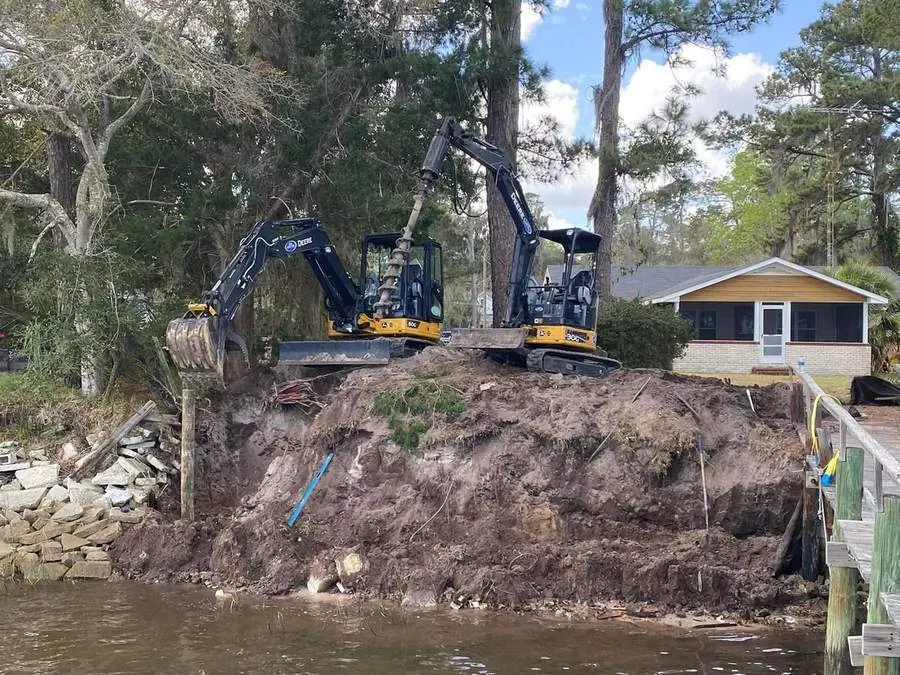
Most owners don't see the erosion itself. They see what it leaves behind on the land side of the wall:
- Soft or spongy ground within 5 to 10 feet of the seawall.
- A sinkhole or dip in the lawn, patio or pool deck near the cap.
- Sand or soil washing out through cracks, joints or weep holes after a high tide or a heavy rain.
- Water weeping through the panel during or after storms.
- Stair-step cracks along the panel joints, where one section has settled more than the next.
Each of these means the fill behind the panel is leaving. Water comes in through a gap, and every tide carries a little more soil back out with it. That leaves a void, and a large void can let the panel crack, tip or give way in a storm surge.
If you're seeing any of these, it's no longer a prevention job. The erosion has already happened, and the wall needs the soil put back.
How is erosion repair different from erosion control?
Seawall erosion control is about stopping soil loss before it gets serious: sealing entry points, managing water pressure and keeping the wall tight. Erosion repair is what we do once soil is already gone and there's a hole, a soft spot or a settling slab behind the wall. Here we put back what was lost and close the path it took.
In practice the two overlap, and one inspection tells us which you need.
How do we repair seawall erosion?
- Free inspection and probe test. We look at the wall from the land side and the water side and push a probe rod through the soil behind the panel to find hollow spots. We don't accept a visual-only check, and you shouldn't either.
- Void map. We mark where each void is and how deep it runs, so you can see the problem before you pay to fix it.
- Seal the way in. Cracks, open joints and gaps at the toe of the wall get sealed so water stops carrying soil out.
- Fill the voids. We drill small holes through the panel and inject two-part polyurethane foam. It expands into the empty space, cures in minutes and reaches full strength within 24 hours. It stays rigid and waterproof in salt water.
- Relieve the pressure. If trapped water helped cause the erosion, we add or clear relief drains so it can't build up again.
- Re-probe and report. We probe the treated areas again to confirm the voids are full and give you a written report of the work.
Most of this is done from the water side, so your lawn, pavers and pool deck stay where they are.
What if the wall is already leaning?
Erosion and movement often show up together. If the wall has tipped or bowed toward the water, or you see horizontal cracks, filling voids alone isn't enough. We'll pair the repair with helical tiebacks or a broader seawall reinforcement plan to hold the wall in place. If the panel itself has shattered or collapsed, we'll tell you plainly that it needs bulkhead replacement instead.
What does seawall erosion repair cost?
Based on our posted pricing, erosion work typically runs $80 to $300 per linear foot, depending on how deep the voids go, how much fill is needed and how easy the wall is to reach. A typical 80-foot residential seawall comes to about $5,000 to $18,000. Full seawall replacement of the same wall runs $30,000 to $80,000. Polyurethane injection on its own often costs 20 to 40% of what replacement would.
You'll get a written estimate after the free inspection, with permits, materials and labor included.
What one homeowner found
"Solid Foundations was thorough, professional, and honest. They found three void zones behind our seawall panels, explained everything with photos, and completed the polyurethane injection in one day. Our seawall feels rock solid now." Robert H., Tampa, FL
Why do Florida, Georgia and South Carolina seawalls erode?
Sandy coastal soil moves easily once a gap opens. On top of that, our walls take tidal swings twice a day, storm surge, boat wake from nearby channels, heavy summer rain with nowhere to drain, and roots growing near the footings. Many seawalls built from the 1970s to the 1990s are reaching the end of their design life, and walls built before about 2000 often have no relief drains at all. We repair erosion on saltwater canals, rivers and bays, and on freshwater lake seawalls too.
Who does the work?
Seawall Repairs by Solid Foundations has repaired seawalls in Florida, Georgia and South Carolina since 1996. We hold Florida Certified Building Contractor license CBC1267322, are licensed in Georgia and South Carolina, are fully insured, and are an NCFI-certified top installer for marine polyurethane systems. We're BBB A+ rated. Ask which warranty terms, if any, apply to your proposed repair. Our rule is simple: we won't recommend replacement when a repair will do.
Seawall Erosion Repair FAQ
How do I know if the erosion behind my seawall needs repair now?
A sinkhole, soft ground near the wall, or sand washing through the panel means soil is already gone. Arrange a probe test when you notice these signs. If the wall is moving or you see a fresh collapse, call right away.
Can I just fill the hole behind my seawall with dirt?
Not for long. Topsoil or sand poured in from above will wash out through the same gap. Surface patches can also hide the real problem. The leak has to be sealed and the void filled from behind the panel.
How long does seawall erosion repair take?
Most residential jobs take 1 to 2 days. The polyurethane injection itself usually takes 4 to 8 hours.
Do I need a permit to repair erosion behind my seawall?
It depends on the county and the scope. Small polyurethane void fills often don't need one in many Florida counties, while structural work usually does. We check during the inspection and handle any permits for you.
Will insurance pay for seawall erosion repair?
Gradual erosion and aging are usually excluded. Damage from a sudden event, like surge during a named storm, may be covered. Call your insurer first. We can give you photos and a written report to support a claim.
Get a free erosion inspection
Seen a soft spot or a sinkhole behind your wall? Call 866-398-9323 or request a free inspection. We serve waterfront owners from Cape Coral and Tampa to Fort Lauderdale, Jacksonville, Savannah and Charleston. See every town on our service areas page.